
OON Workflow – Financial Hardship
Applying Financial Hardship Discounts and Percentage Reductions in Billing
Handle patient accounts efficiently by applying financial hardship discounts—either as a flat rate or a percentage reduction. Learn how these scenarios work, when to use each, and see how the system determines the final patient responsibility (PR).
Step 1: Open the case where you want to apply a financial hardship adjustment.
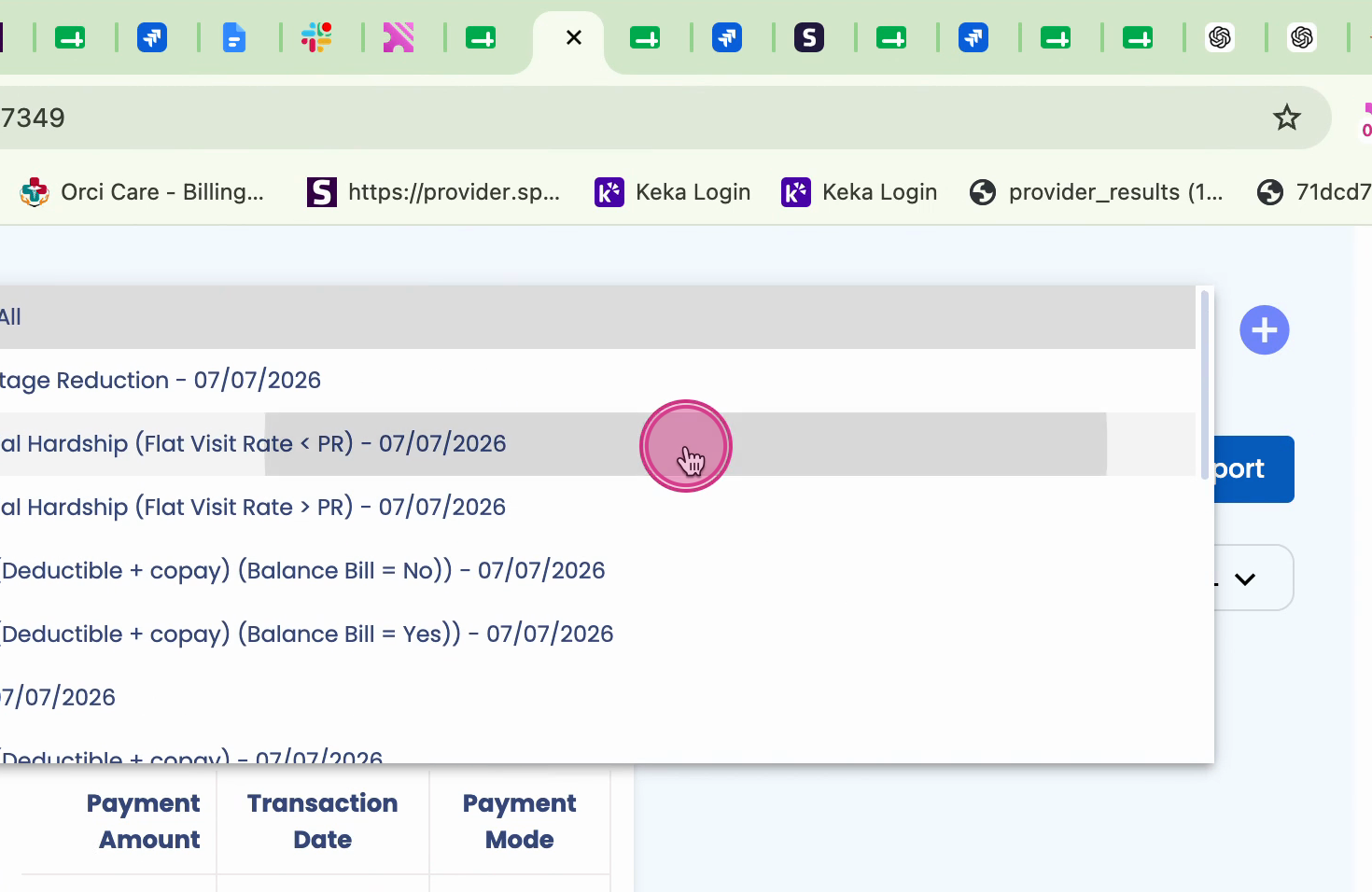
Step 2: Scroll down to the Patient Rated or Financial Hardship section.
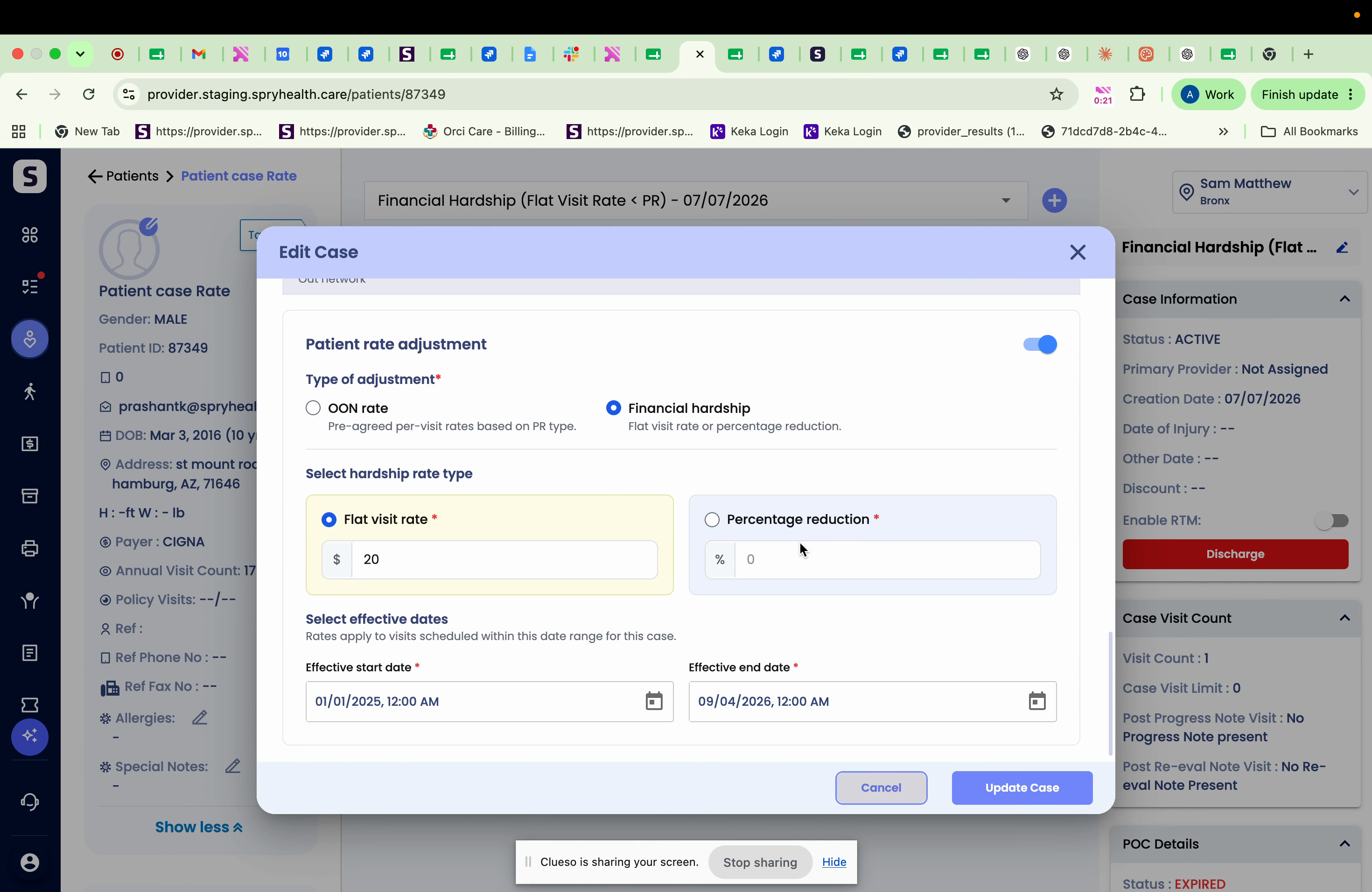
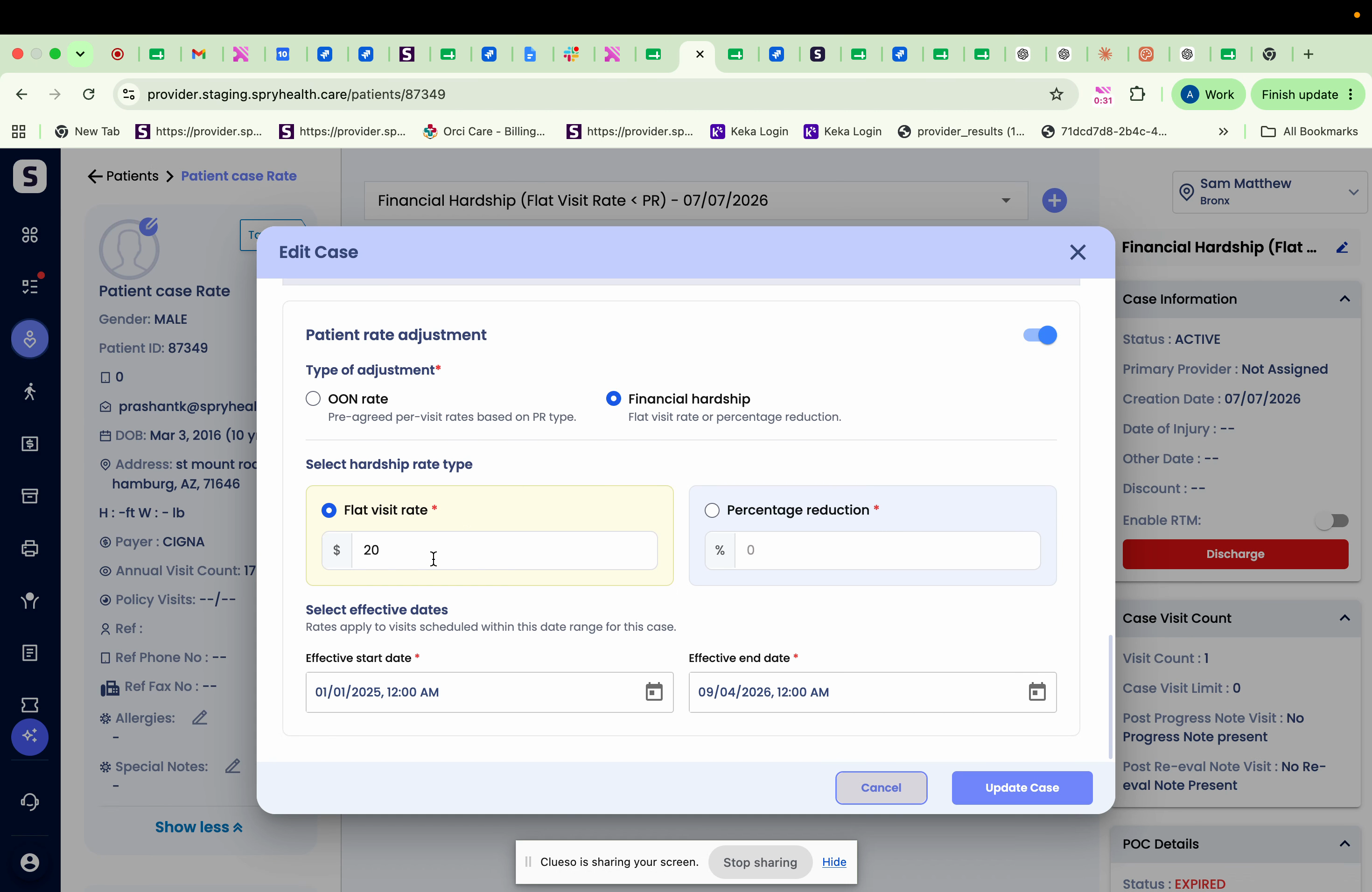
Step 3: Select the financial hardship option and enter a flat rate (e.g., $20).
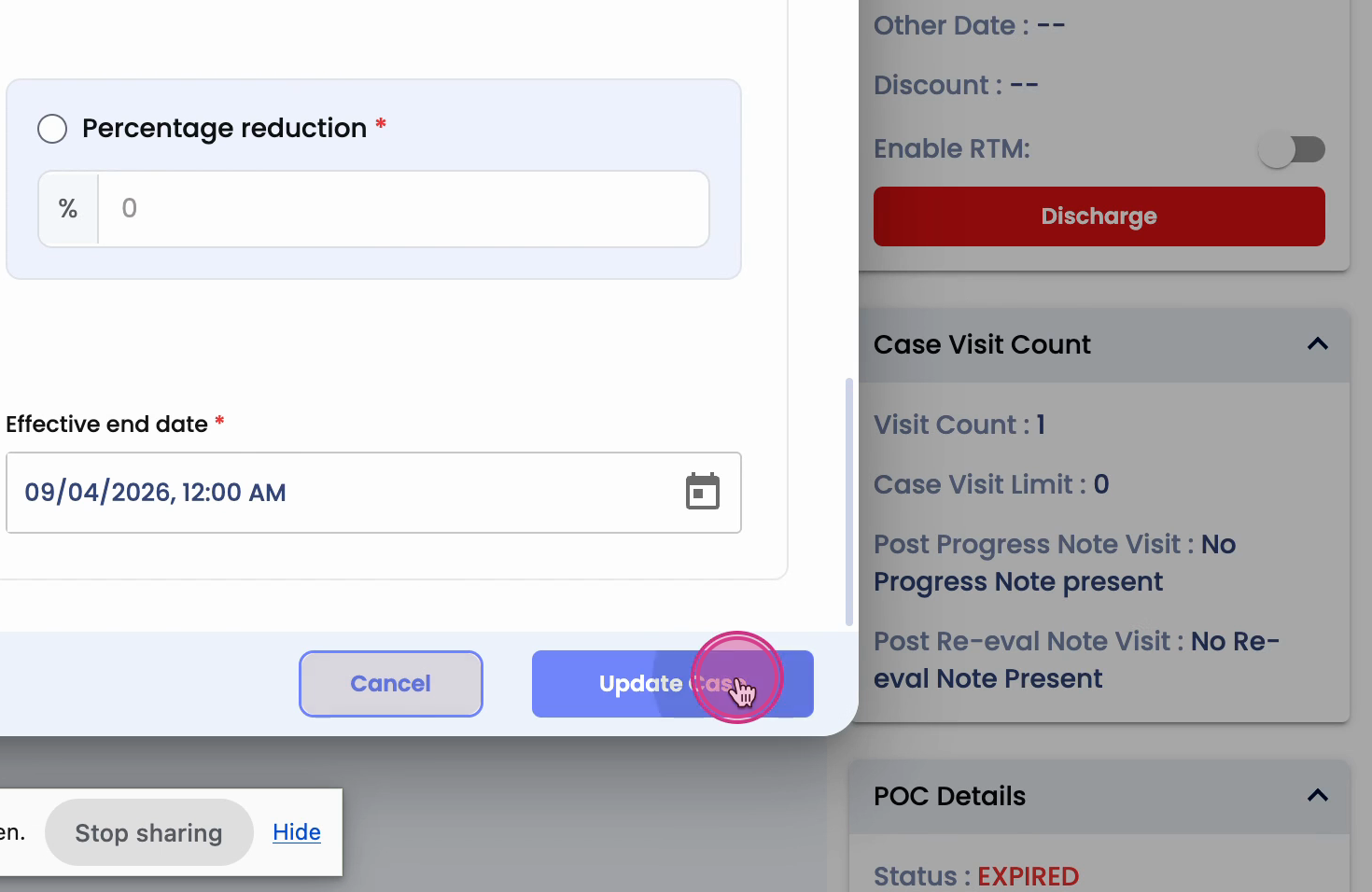
Step 4: Click Update Case to save your changes.
Step 5: Go to the patient's appointment and open the Billing Info screen to confirm the flat rate is applied.

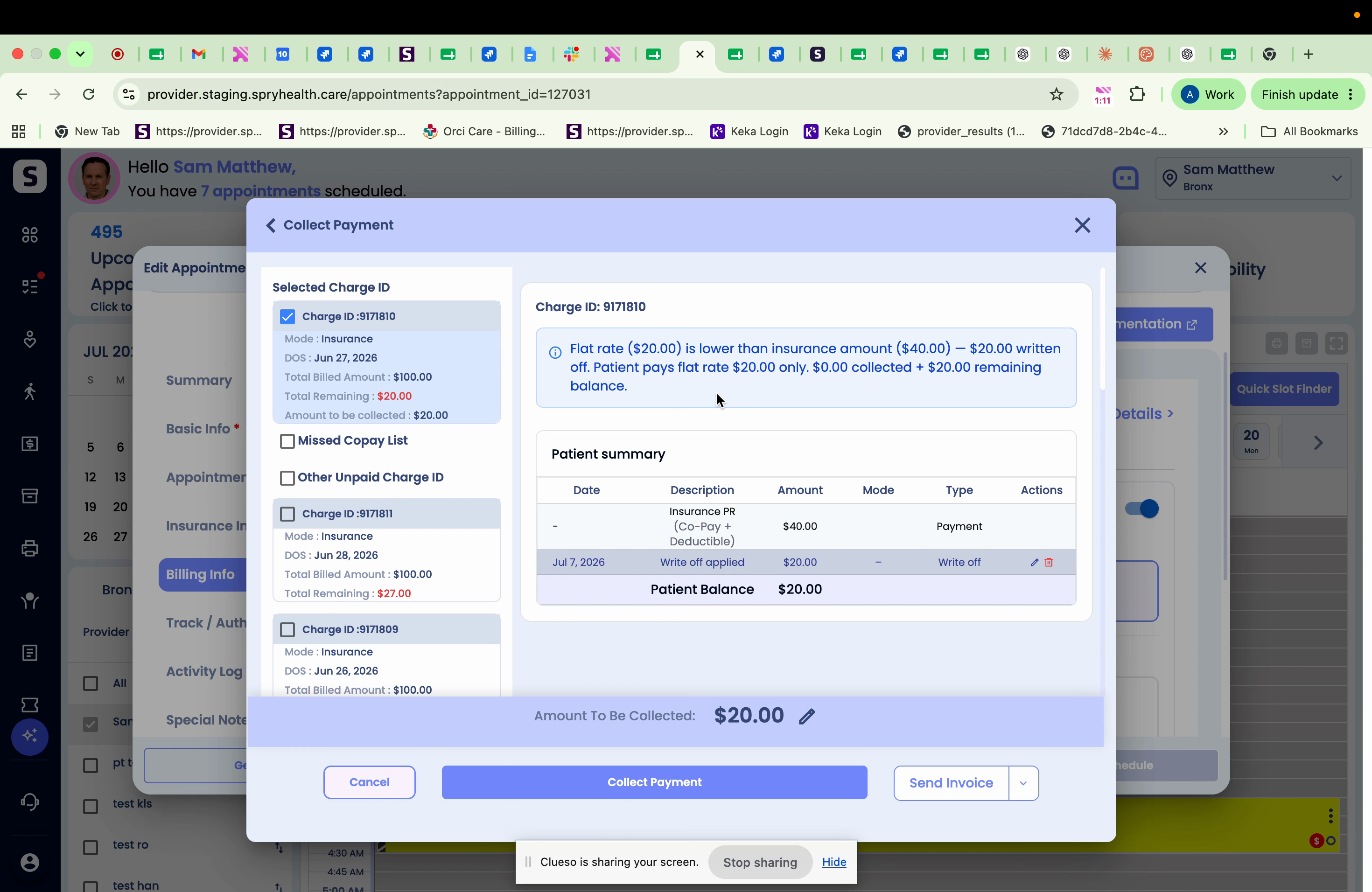
Step 6: Click View Details to compare insurance PR and the hardship flat rate.
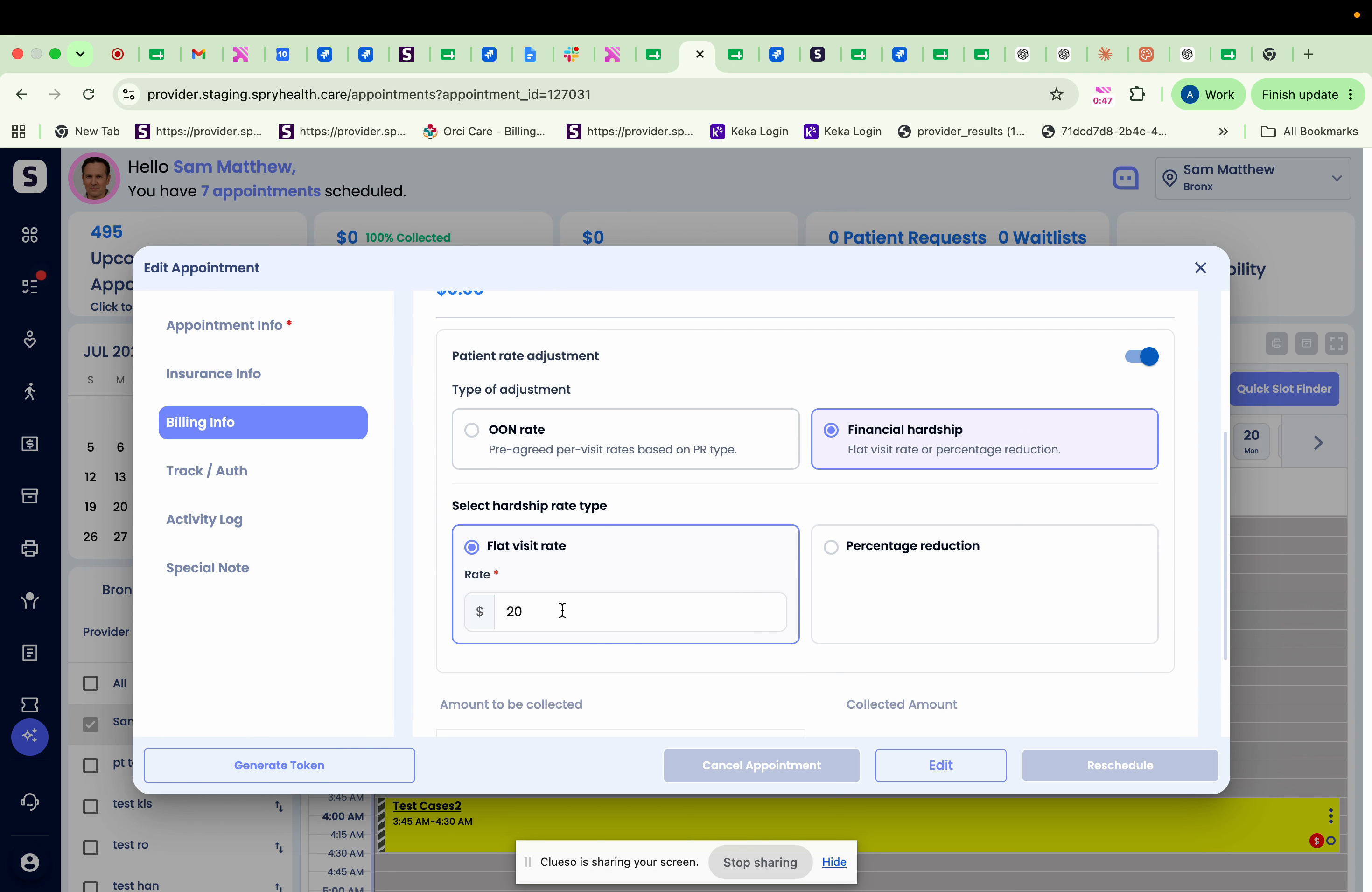
The system compares the insurance PR and the flat rate:
- If the insurance PR is greater than the hardship amount (e.g., $40 insurance PR vs. $20 hardship flat rate), only the hardship amount is due. The remaining amount is written off.
- If the insurance PR is less than the flat rate (e.g., $25 insurance PR vs. $90 flat rate), the patient is only responsible for the smaller insurance PR amount.
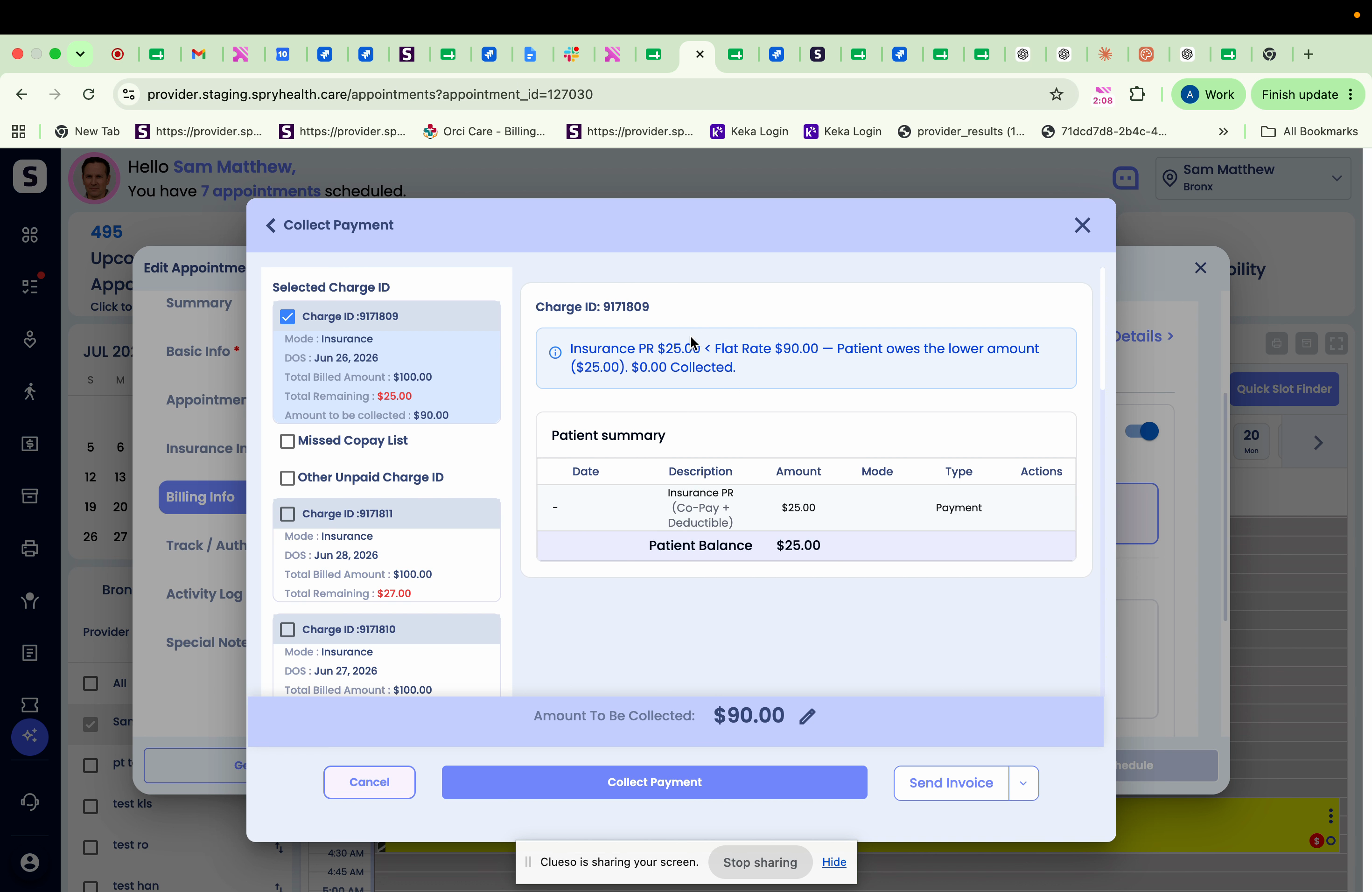
- The system always uses the lower of the insurance PR or hardship amount as the final patient responsibility.
Applying a Percentage Reduction for Financial Hardship
Apply a percentage-based discount so the patient pays a reduced amount, calculated from the original responsibility.
Step 1: Navigate to the case and select Financial Hardship with Percentage Reduction.
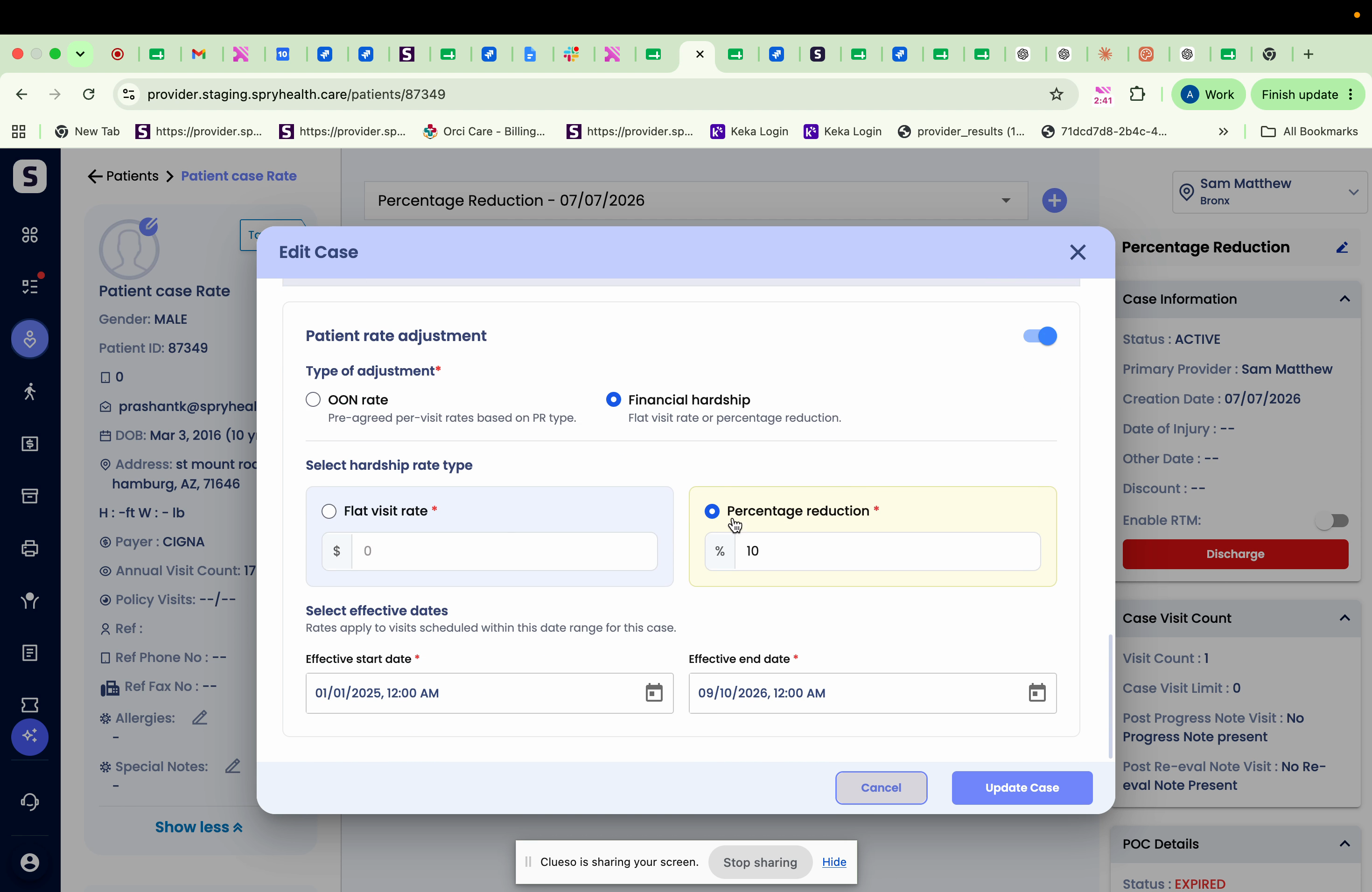
Step 2: Enter the discount percentage (e.g., 10%).
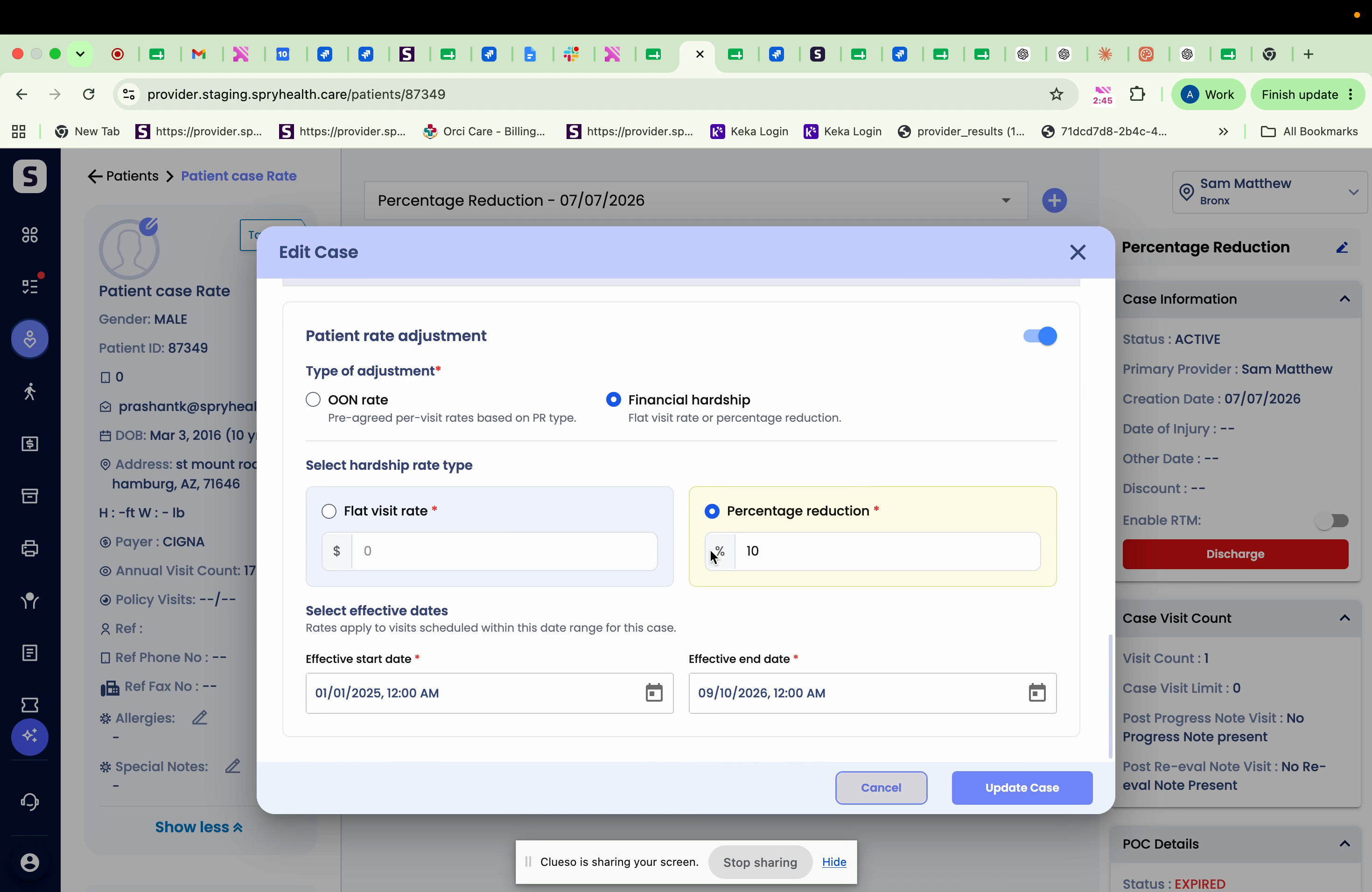
Step 3: Click Update Case.
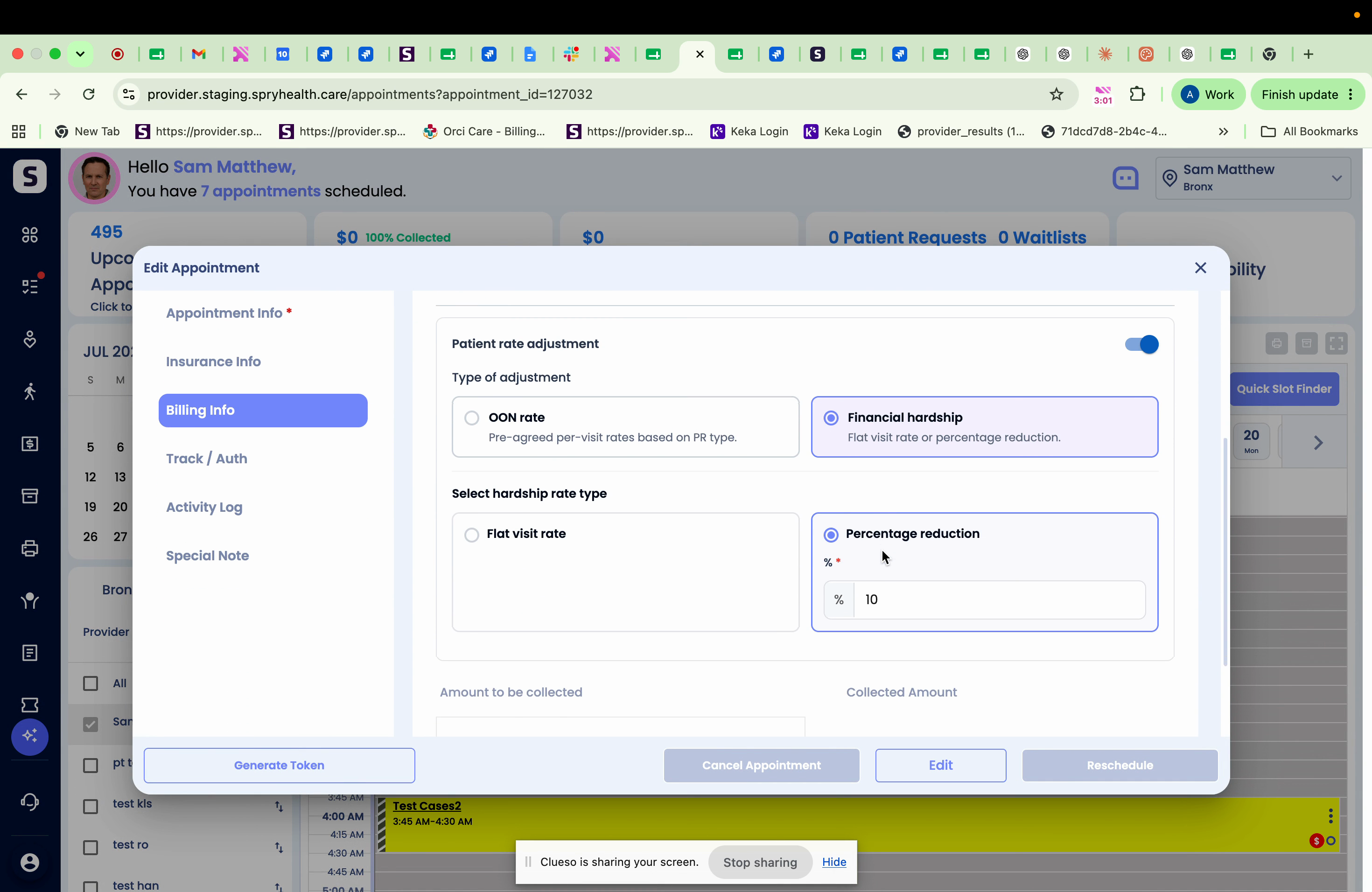
Step 4: Return to the patient's appointment and check the Billing Info screen to confirm the percentage rate is listed.
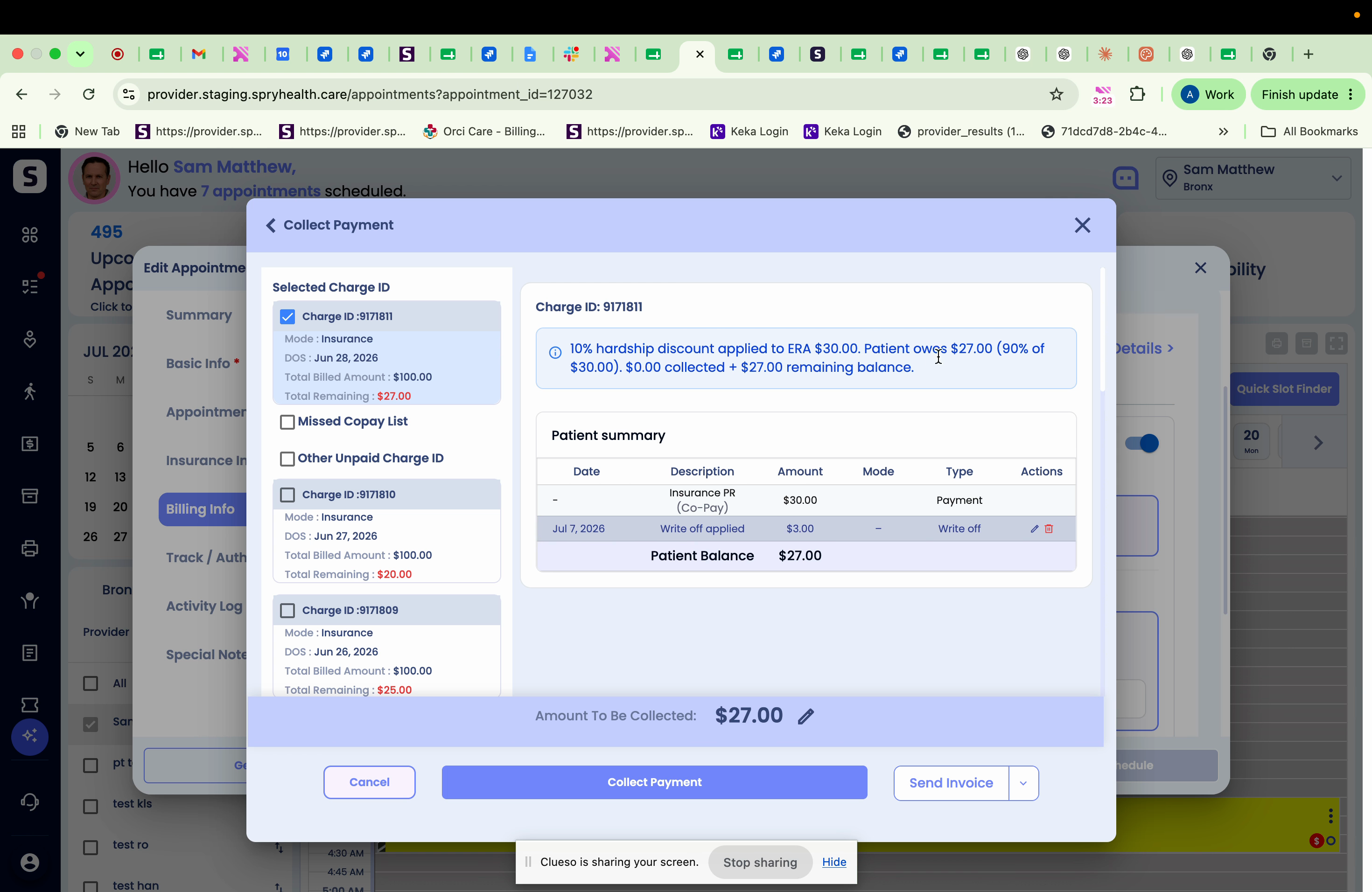
Step 5: View the case details after remittance advice is processed. The discount applies, reducing the patient’s final responsibility (e.g., a 10% hardship discount lowers PR to $27).
This process ensures patients facing financial hardship pay the lowest eligible amount, either by flat rate or percentage reduction. Use these features to provide fair billing and flexible support for those who need it.